Aesop's Fables for Preschoolers: A Parent's Guide
As an Amazon Associate I earn from qualifying purchases.
Aesop’s fables are the closest thing we have to a common inheritance of stories, and they are remarkably well suited to small children: they are short, the characters are animals, and the plot is almost always a single decision that goes one way or the other. A three-year-old can hold that. They cannot hold a novel.
But they were not written for three-year-olds. They were written — or more accurately, collected — for adults, as arguments in miniature, and quite a lot of them are savage. Animals are eaten, deceived and left to starve, and the moral is frequently that the world is unforgiving and you should have planned better. Any parent who has read an unabridged collection out loud at bedtime has had the experience of realising, three lines from the end, that this is not going to finish well.
So the practical question is not whether to read Aesop to a preschooler. It is which fables, in which version, at what age.
I spent two years adapting thirty of them into picture books, which mostly taught me how difficult they are and how good the best existing versions already are. What follows is what I would tell a friend: the editions I would actually buy, in the order I would buy them, and then — clearly marked and at the bottom — my own, because it would be strange to pretend they do not exist.
Which fables work at which age
Roughly, and with the obvious caveat that children vary enormously:
Three to four wants fables where somebody does a thing and something happens. The Lion and the Mouse. The Tortoise and the Hare. The Town Mouse and the Country Mouse. The lesson can be restated as an event — he was kind and then he was helped — with no inference required.
Four to five can manage a consequence that arrives later than the action. The Ant and the Grasshopper works here, because the winter is a long way from the summer and the child can now hold both. The Boy Who Cried Wolf becomes possible, though it is bleak.
Five to seven is where the ones about self-deception start to land. The Fox and the Grapes. The Dog and Its Reflection. These require a child to notice a character’s mind doing something the character has not noticed, which is a real cognitive step and cannot be rushed.
The mistake I made early — repeatedly — was assuming that a short story was therefore a simple one. Some of the shortest fables are the most sophisticated, and reading them too early does not do harm so much as nothing at all.
The single-fable picture books — start here
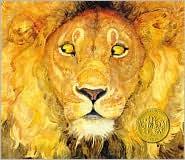
The Lion & the Mouse
Jerry Pinkney Ages 3–8
Wordless, except for a few animal noises, and it won the Caldecott Medal for good reason. A mouse spares a lion's dinner; later the mouse gnaws through the net that traps him.
This is the best possible first fable, precisely because there are no words. Your three-year-old has to work out what happened and tell you — and a child who narrates the story has understood it in a way that being told the moral never achieves. If you buy one book from this guide, buy this one.
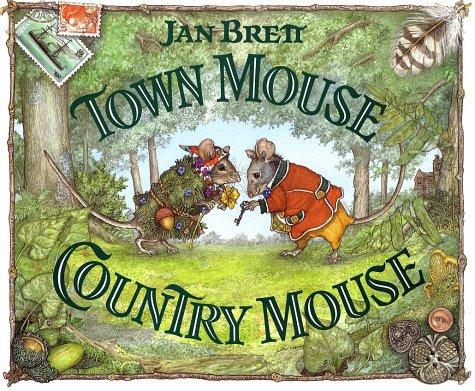
The Town Mouse and the Country Mouse
Jan Brett Ages 3–7
Brett's version swaps the two mice into each other's lives, and her illustrations are so dense with detail that children spend as long looking as listening.
A gentle one to start with because nobody is punished — the fable's whole argument is that the two mice simply want different things. Small children grasp "he likes it here and she likes it there" long before they can handle a story where someone is eaten.
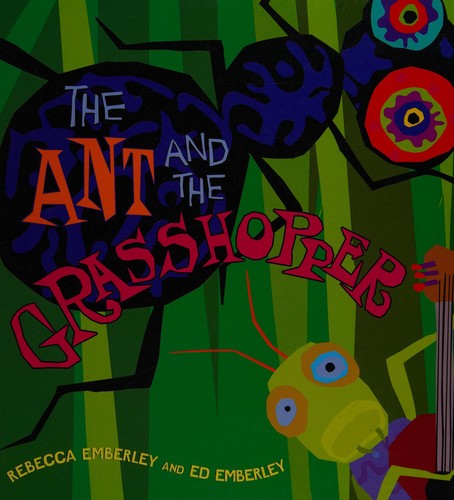
The Ant and the Grasshopper
Rebecca Emberley and Ed Emberley Ages 3–7
Bright, loud, cut-paper artwork and a version that lets the grasshopper keep his music. The Emberleys soften the traditional ending, in which the grasshopper essentially starves.
Worth knowing that softening has happened, because the original is harsh and you may want the harsh one later. At four, this is the right amount.
Good collections to read from
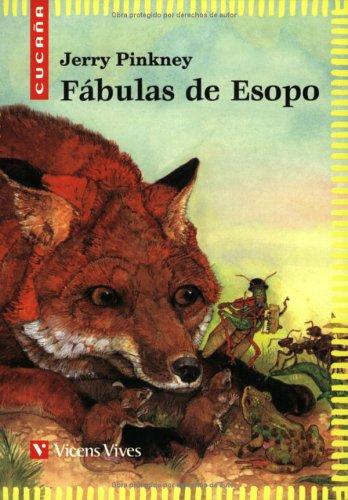
Aesop's Fables
Jerry Pinkney Ages 4–9
Sixty-odd fables, beautifully painted, one or two to a page. This is the collection I have gone back to most often — Pinkney's animals have real weight to them, and the retellings are plain without being flat.
Collections work differently from single-fable books: you dip in for two minutes rather than reading a whole story. That suits a lot of families better, and it is how these were originally used.
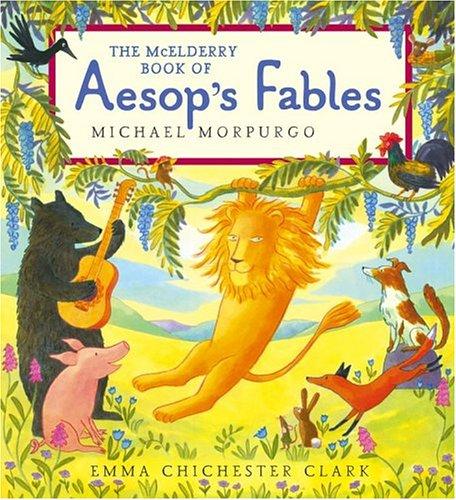
Aesop's Fables
Michael Morpurgo and Emma Chichester Clark Ages 5–9
Morpurgo retells about twenty fables at greater length, as proper little stories rather than compressed lessons, and Chichester Clark's pictures are warm and funny.
The one for a child who has outgrown the one-page version and wants something to settle into. Longer than a preschooler will sit for — this is where you go next, at five or six.
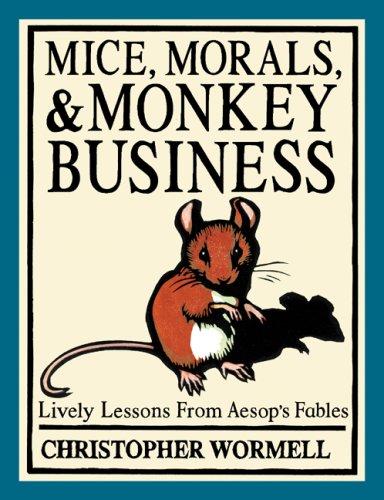
Mice, Morals, & Monkey Business
Christopher Wormell Ages 3–7
Ten fables, each reduced to a single striking image and a one-line moral. Wormell's linocuts are gorgeous.
Almost the opposite approach to Morpurgo — this is the fable stripped back to a picture and a sentence. Surprisingly effective with three-year-olds, who take the picture in whole and ask about it later.
Not Aesop, but the same job
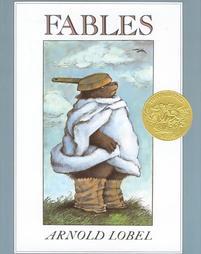
Fables
Arnold Lobel Ages 5–9
Twenty original fables in the Aesop tradition, written and painted by the man who made Frog and Toad. It won the Caldecott Medal in 1981.
I am including it because it does something no Aesop collection does: the morals are often absurd, and occasionally the animals are simply wrong. Lobel is playing with the form, and a child who has read a lot of fables finds this extremely funny.
Mine, for completeness
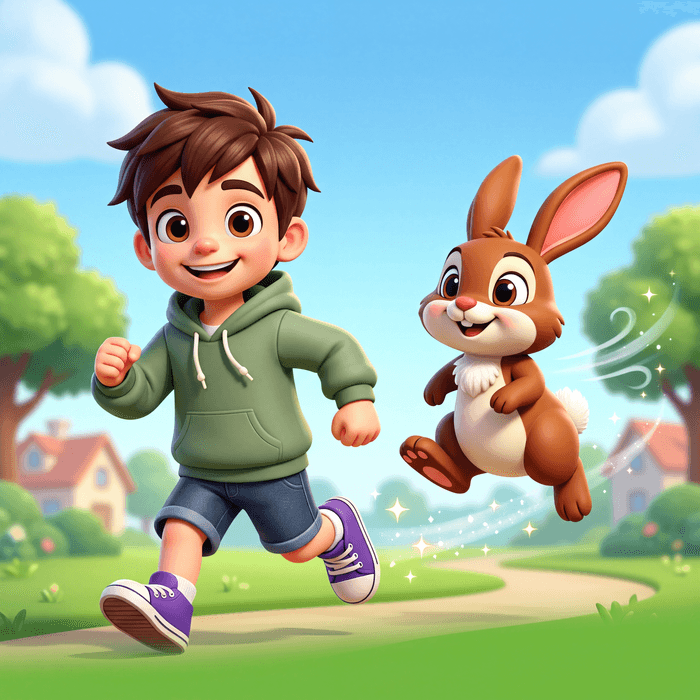
One of mine
Sage and the Big Race
C.J. Crompton Ages 3–8
These next three are mine, and the whole series is thirty of these, so treat this section as disclosure rather than recommendation.
Sage and the Big Race is the tortoise and the hare, with the hare's part rewritten. In the original he is arrogant and gets what he deserves. Mine is simply four years old and sincerely believes that fast is how you win races, which is what four-year-olds actually think.
One of mine
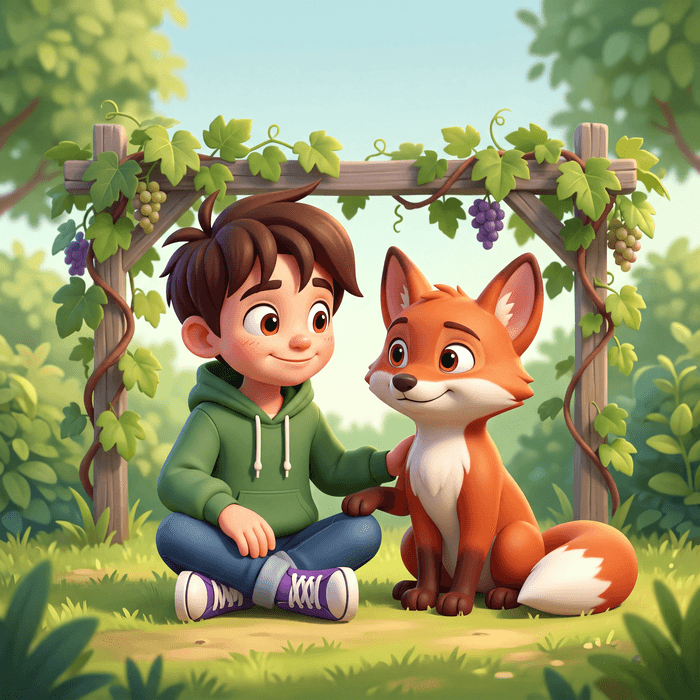
Sage and the Sour Grapes
C.J. Crompton Ages 3–8
The fox and the grapes — the one where, unable to reach them, he decides he never wanted them anyway.
This is the fable I found hardest to adapt, and I think it is the hardest one in the canon for young children generally. The whole point is self-deception, and you have to be able to notice your own mind doing something before that lands. Some five-year-olds get it. Most threes do not, and there is no way to force it.
One of mine
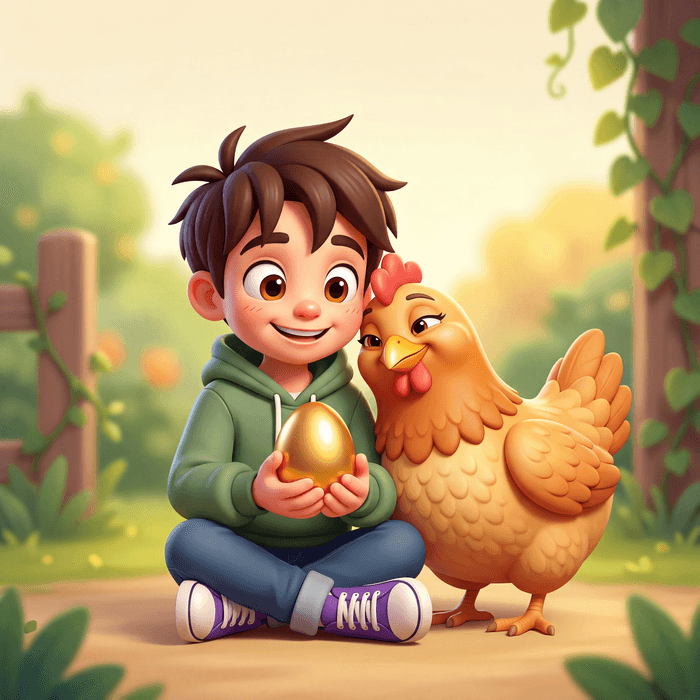
Sage and the Golden Eggs
C.J. Crompton Ages 4–8
The goose that laid the golden eggs. About wanting everything at once and losing the thing that was producing it.
A good example of what adaptation actually involves: in the original the goose is killed, which is not where I wanted a picture book for three-year-olds to go. Working out how to keep the logic of a fable while losing its violence was most of the job across all thirty.
How to actually use these
A few practical things I learned the slow way:
Read the story, skip the moral. Almost every edition ends with a line in italics telling you what it meant. Cover it. A child who works out that the mouse helped the lion back has learned something; a child who is told "even the weak can help the strong" has learned a sentence. If they do not get it, they will next year.
Three-year-olds want the animals, not the lesson. That is fine, and it is not a failure. The fable is doing its work by being remembered. The meaning attaches later, often years later, usually at a moment that has nothing to do with you.
Fables are short — read three. Their original form was oral and quick. Trying to make one carry a whole bedtime tends to strain it. Two or three from a collection is closer to how they were meant to arrive.
Some are genuinely too dark. The grasshopper starves. The goose is killed. The boy who cried wolf is not saved. Modern editions vary enormously in how much they soften, so it is worth reading a new one yourself before bedtime rather than discovering the ending out loud.
Ask "was that fair?" It is the single best question to follow a fable with, because it invites disagreement. Some fables are not fair, and a child who argues with the ant for refusing to help has understood the story far better than one who nods.
Aesop probably did not exist. Or at least, not as one person — the collection accumulated over centuries and kept his name. Worth knowing, and worth telling a curious seven-year-old, because it makes the stories feel less like homework and more like something everybody has been passing along.
C.J. Crompton writes the Sage's Adventures series — thirty picture books for ages 3–8, retelling Aesop's fables for modern children. You can browse the whole series or download free coloring packs.